How Does Energy Choice Work in Massachusetts?
Learn how Massachusetts' deregulated energy market lets residents choose a competitive supplier while Eversource, National Grid, or Unitil still deliver…

Written by Hash Manesia
Published on Oct 12, 2026
|
7 min read
Reviewed by Jeff Mahoney
How Does Energy Choice Work in Massachusetts?
What Does Energy Choice Mean in Massachusetts?
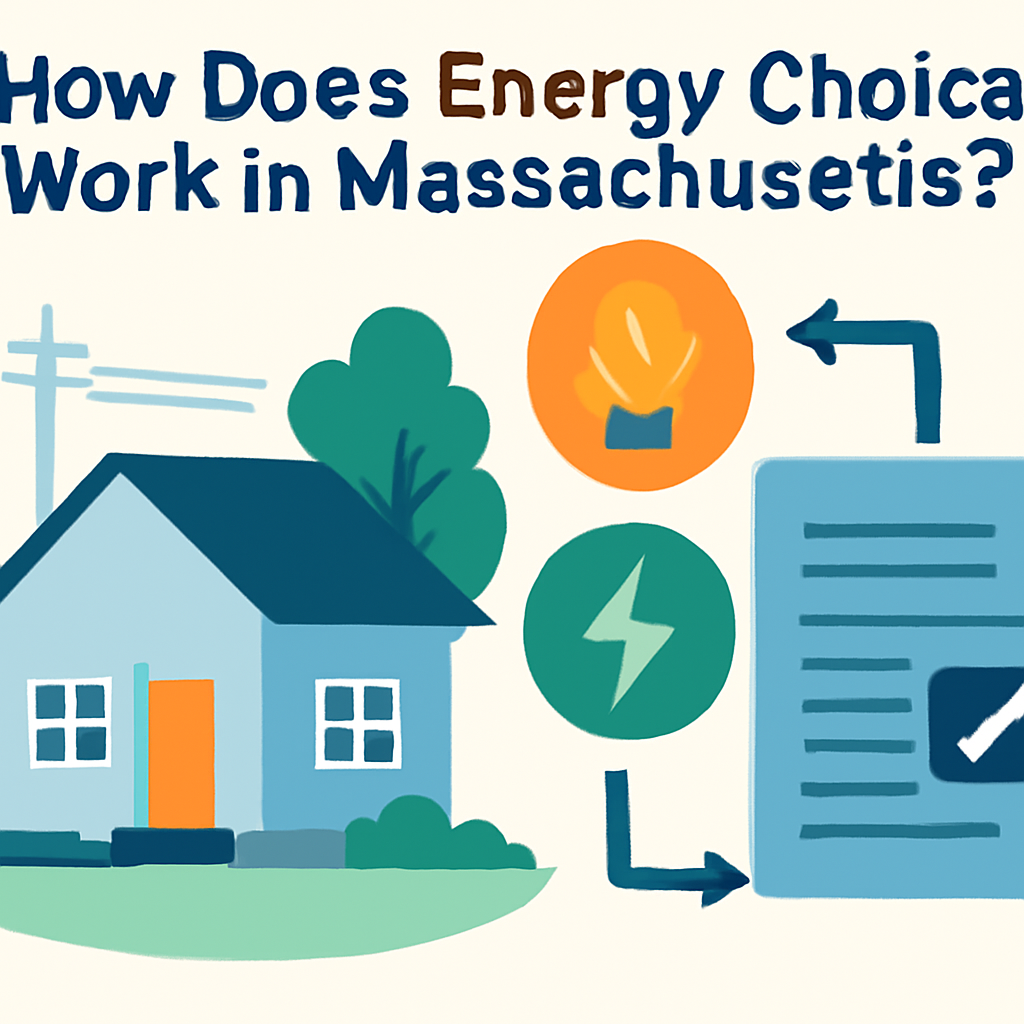
Massachusetts operates a deregulated energy market, which means residents are not required to accept the electricity supply arrangement automatically assigned to their address. Instead, households can choose the company that supplies the actual energy commodity they use, while the physical delivery of that electricity continues to run through the existing local infrastructure. This structure separates the idea of choosing who you buy energy from the idea of who moves that energy to your home, giving residents more say in how they source their power.
In practical terms, energy choice means a resident can shop among competitive suppliers for electricity terms and offer structures that may differ from the arrangement they would otherwise be placed in. The wires, poles, and meters outside a home do not change based on this decision. What changes is which company is credited with supplying the underlying energy that flows through those wires.
The Difference Between a Utility and a Supplier
Understanding energy choice starts with separating two roles that are often confused: the utility and the supplier. In Massachusetts, Eversource Energy, National Grid, and Unitil are the utilities responsible for delivering electricity to homes and businesses. They maintain the poles, wires, substations, and meters, respond to outages, and handle the physical infrastructure that keeps power flowing regardless of who supplies the underlying energy.
A supplier, by contrast, is a separate company that sells the actual electricity commodity. Suppliers do not own or maintain any local infrastructure; they simply provide the energy itself, which is then delivered by the utility. This distinction, electricity delivery versus electricity supply, is the foundation of how energy choice functions. A resident's utility does not change no matter which supplier they select, because the utility's role is delivery, not sales.
- Utility: owns and maintains poles, wires, and meters; handles outage response and delivery
- Supplier: sells the electricity commodity itself, separate from delivery infrastructure
- Both roles can appear on the same bill, but they represent different services
How the Massachusetts Department of Public Utilities Oversees Energy Choice
The Massachusetts Department of Public Utilities (MA DPU) is the state regulator responsible for overseeing how energy choice operates. The MA DPU sets rules that govern how utilities and suppliers interact, licenses suppliers before they are permitted to operate in the state, and monitors marketplace conduct to help protect consumers from unfair or misleading practices.
Because the MA DPU licenses suppliers, residents can generally expect that any supplier lawfully operating in Massachusetts has met the state's baseline regulatory requirements. The MA DPU also plays a role in maintaining the reliability expectations placed on utilities like Eversource Energy, National Grid, and Unitil, ensuring that delivery service quality is not affected by a resident's choice of supplier.
What Happens If You Don't Choose a Supplier
Residents who do not actively select a competitive supplier are not left without power. Instead, their utility, whether Eversource Energy, National Grid, or Unitil, arranges the electricity supply on their behalf through a fallback arrangement generally referred to as default service. This ensures that every resident continues to receive electricity even if they never engage with the competitive supplier market.
Default service is administered by the utility, but the utility is still simply arranging supply rather than acting as a competitive seller in the way a supplier does. Residents remain free to move away from this default arrangement at any point by selecting a competitive supplier, and they can also return to it later if their circumstances change.
How to Compare and Switch Energy Suppliers
Switching suppliers in Massachusetts generally follows a straightforward sequence of steps. Residents typically begin by reviewing their current electricity usage and contract terms, then research available competitive suppliers and the offer structures they provide. Once a resident selects a new supplier, that supplier usually coordinates with the utility to complete the switch.
- Review current usage patterns and any existing supplier agreement terms
- Research competitive suppliers operating in the Massachusetts market
- Compare offer structures and contract terms across suppliers
- Select a supplier and allow the switch to be processed with the utility
- Continue receiving one bill through the utility, which still manages delivery
Throughout this process, delivery service itself does not change. Eversource Energy, National Grid, and Unitil continue to maintain the infrastructure and respond to outages no matter which supplier a resident chooses. What changes is the line item associated with the electricity commodity itself.
Why Some Residents Use an Energy Broker to Navigate Choice
Because the competitive supplier market can involve comparing multiple offer structures and terms, some residents turn to an energy broker to help make sense of the available options. Gatby operates in this capacity: it helps customers find and connects them with supplier options, and can assist in managing those arrangements over time. Gatby does not sell energy, generate power, or act as a supplier itself; its role is limited to helping residents navigate the choices already present in the deregulated market.
This distinction matters because it keeps the roles clear: utilities deliver electricity, suppliers sell it, the MA DPU regulates the overall market, and a broker like Gatby helps residents understand and manage the options between them without stepping into the role of a utility or a supplier.
Common Questions About Switching or Returning to Default Service
Residents considering a switch often have similar concerns about billing, reliability, and reversibility. In general, switching suppliers does not interrupt electricity service, since the utility continues to handle delivery throughout the transition. Billing typically continues to arrive from the utility, even though the supply portion of the bill reflects the newly selected supplier's terms.
Residents who switch to a competitive supplier and later wish to return to their utility's default arrangement are generally able to do so. Because delivery is handled by the same utility regardless of supplier, service reliability during a switch, or a return to default service, is not expected to change.
Frequently Asked Questions
Does switching suppliers in Massachusetts affect who delivers my electricity?
No. Delivery continues to be handled by the utility serving your area, whether that is Eversource Energy, National Grid, or Unitil, regardless of which competitive supplier you choose.
What is the difference between a utility and a supplier?
A utility owns and maintains the infrastructure that delivers electricity, including poles, wires, and meters, and responds to outages. A supplier is a separate company that sells the underlying electricity commodity itself, without owning local delivery infrastructure.
What happens if I never choose a competitive supplier?
You are not left without electricity. Your utility arranges supply on your behalf through a fallback arrangement known as default service, ensuring continuous electricity while leaving the option to select a competitive supplier open at any time.
Who regulates energy choice in Massachusetts?
The Massachusetts Department of Public Utilities (MA DPU) regulates the market, licenses competitive suppliers, and monitors conduct to help protect consumers as they navigate energy choice.
Can I return to default service after switching to a supplier?
Yes. Residents who switch to a competitive supplier can generally return to their utility's default arrangement later, since the utility continues to manage delivery and can reinstate that fallback supply arrangement.
Does an energy broker like Gatby supply electricity?
No. Gatby helps customers find and connects them with supplier options and can assist in managing those arrangements, but it does not sell energy, generate power, or act as a supplier or utility.
Let Autopilot take energy shopping off your plate — just enter your zip code
Table of Contents
Table of Contents
You may also like