How to Choose an Electricity Plan in Texas (October 2026)
Learn how to pick the best electricity plan in Texas. Compare rates, deposits, and plan types, or let Gatby's Autopilot program manage your energy plan automatically.


Last Updated: Sunday, October 25th, 2026
Compare rates from the top 25+ electricity providers
Main Takeaways
Use your actual kWh data from Smart Meter Texas — not estimates. The 'best' plan for a 1,200 kWh home can overcharge a 650 kWh apartment by 40%.
The advertised rate is rarely your real rate. Use the EFL formula: (Energy Charge + TDSP Fee + Base Charge) ÷ kWh to find your true cost.
TDSP delivery fees make up 35–40% of your bill and vary by region — they're not set by your provider and can't be negotiated away.
Why Choosing the Right Plan Actually Matters
Most Texans pay between 13¢ and 17¢ per kilowatt-hour (kWh) depending on season, region, and contract type (EIA data, 2025). That might not sound like much—but choosing the wrong plan can cost hundreds per year.
The average Texas household spends about $1,800 annually on electricity. With hundreds of plans in deregulated markets like Houston, Dallas, and Corpus Christi, the key isn't just picking a provider—it's picking a plan structure that fits your lifestyle.
Short-Term Residential Electricity Outlook

As rates continue to rise, it's important that Texans make the right choice on their electricity plan.
Power Move: Don't treat your electricity plan like a set-it-and-forget-it subscription. One bad fit can quietly drain your wallet every month.
Step 1: Start with Your Actual Usage
Your usage is the single most important factor when picking a plan. Pull your data from Smart Meter Texas or your last 12 bills.
- Apartments: 550–700 kWh/month average.
- Single-family homes: 1,100–1,400 kWh/month average.
- Seasonality: Summer can spike usage by 30–40%.
Weather data shows Texas cooling-degree days in July 2025 were 21% above average—a major driver of summer spikes.
Power Move: The 'perfect' plan for a 1,200 kWh home can overcharge a 650 kWh apartment by 40%. Always use your own data.
Step 2: Understand Plan Types (Fixed, Variable, TOU, Bill Credit, Green)
| Term | Description |
|---|---|
| Fixed-Rate Plans | Your rate per kWh stays the same for the contract term (usually 6–36 months). Great for budget stability and predictable costs. |
| Variable-Rate Plans | Your rate changes monthly with ERCOT's wholesale market. You might save in mild months—but during a summer surge, bills can double. |
| Time-of-Use (TOU) Plans | Rates vary by time of day. Night and weekend users can save big if they shift high-load appliances (washer, dryer, EV) outside 3–7 p.m. peaks. |
| Bill Credit / Usage Credit Plans | Offer $50–$100 credits if you hit usage targets (e.g., 1,000 kWh). These can benefit large homes but penalize apartments. |
| Green Plans | Plans backed by Renewable Energy Credits (RECs) under PUC §25.476, which ensure your usage is offset with renewable generation. |
Step 3: Check the Real Price — Not the Ad
To get the real cost:
((Total kWh × Energy Charge) + TDSP Fee + Base Charge) ÷ Total kWh = Real RateReading an Electricity Facts Label (EFL)
On an Electricity Facts Label (EFL) you can see how your average price per kWh is calculated:
- Total kWh: 500kWh
- Energy Charge: 9.847¢ per kWh
- Base Charge: $0 per month
- TDSP Fee: 6.0009¢ per kWh and $4.90 per month
Real Rate Calculation:
((500kWh × 9.847¢) + (500 × 6.0009) + $4.90) ÷ 500kWh = 15.86¢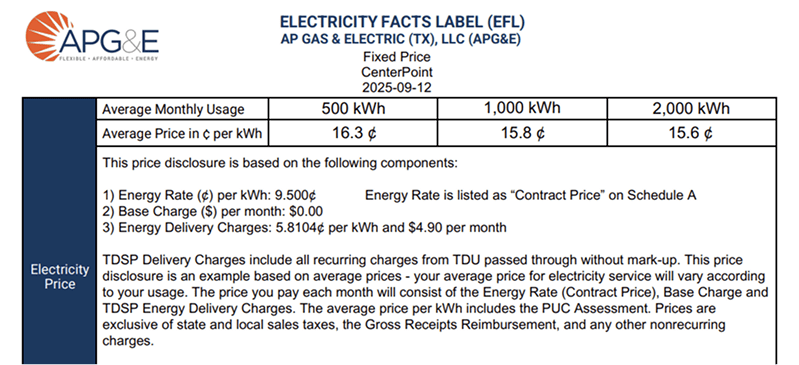
See How to Read an EFL for a full breakdown of how to read this data.
Power Move: Ads show averages. EFLs show truth. Always read the label.
Step 4: Factor in TDSP Delivery Fees
Your Transmission and Distribution Service Provider (TDSP)—not your Retail Electric Provider—controls delivery charges. These are regulated under PUC §25.214 and vary by region:
- Oncor (DFW): ~3.5¢/kWh
- CenterPoint (Houston): ~4.2¢/kWh
- AEP / TNMP (South/West): ~4.5¢/kWh
Delivery rates often:
- Decrease in March (post-winter maintenance period)
- Increase in September (summer capacity recovery)
Seasonal TDSP Rate Patterns
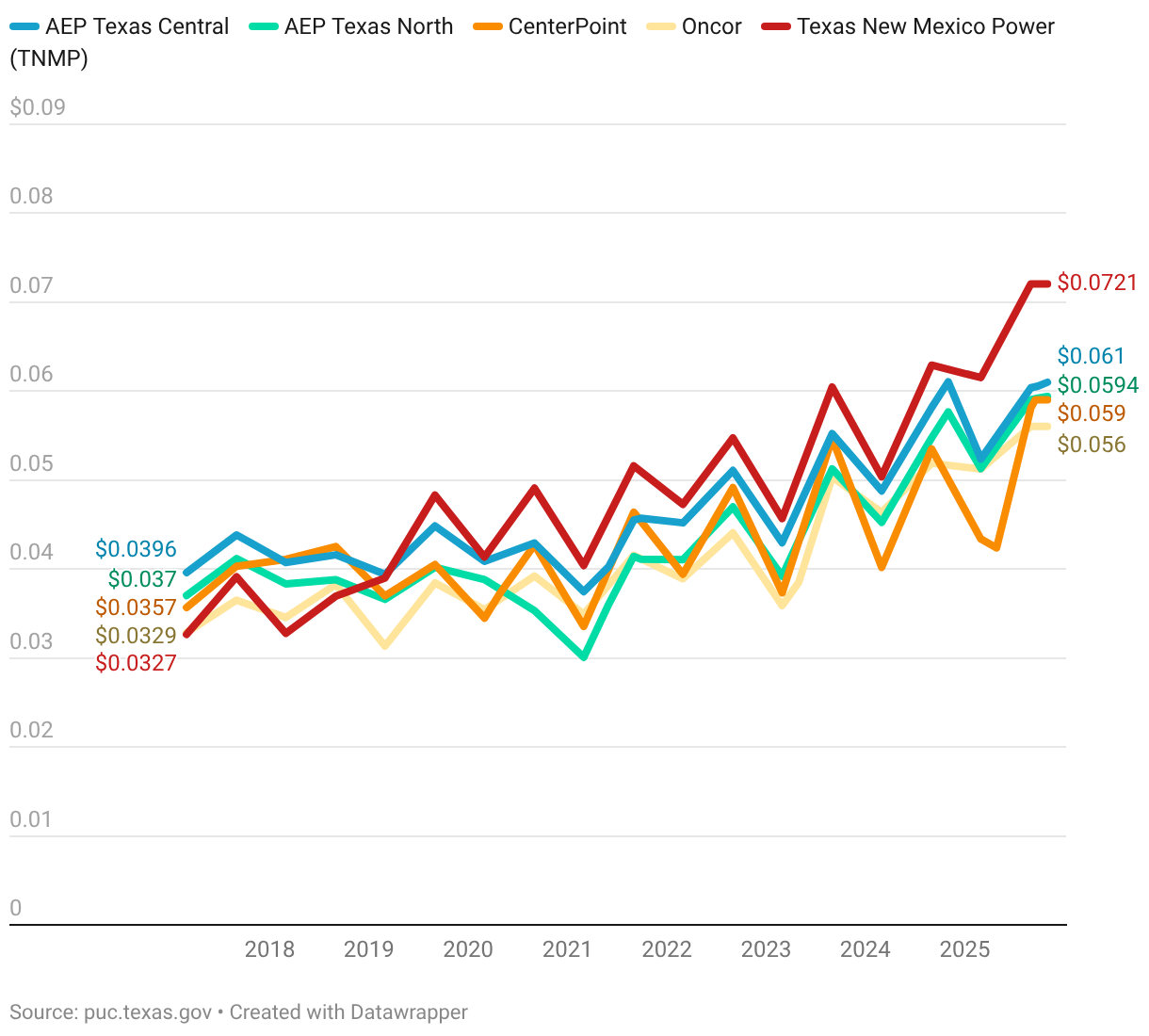
Power Move: TDSP fees can make up 35–40% of your bill. Ignore them, and you'll never know your real cost.
Step 5: ID Requirements, Deposits, and Waivers
Before enrolling, providers verify identity and creditworthiness. Typical requirements include:
- Texas driver's license or state ID
- Social Security number (for soft credit check)
- Proof of lease or home ownership
Deposits
- Usually $100–$300, refunded after 12 months of on-time payment.
- Required if you lack credit history or have poor payment records.
Deposit Waivers (PUC §25.478)
You may qualify for a waiver if you are:
- Age 65+ (Senior Citizen Exemption)
- Victim of Family Violence (Texas Family Code §92.016)
- Low-income applicant enrolled in energy-assistance programs
Power Move: Half of Texans who qualify for deposit waivers never apply. Ask every time you enroll.
Step 6: Timing Your Switch
Market data from ERCOT and EIA show that spring and early fall (March–May, September–October) are the best windows for low fixed-rate contracts. Summer heat spikes ERCOT's wholesale market, while winter storms can tighten supply.
Monthly Average Retail Price in Texas, Cents/kWh (2017–2025)
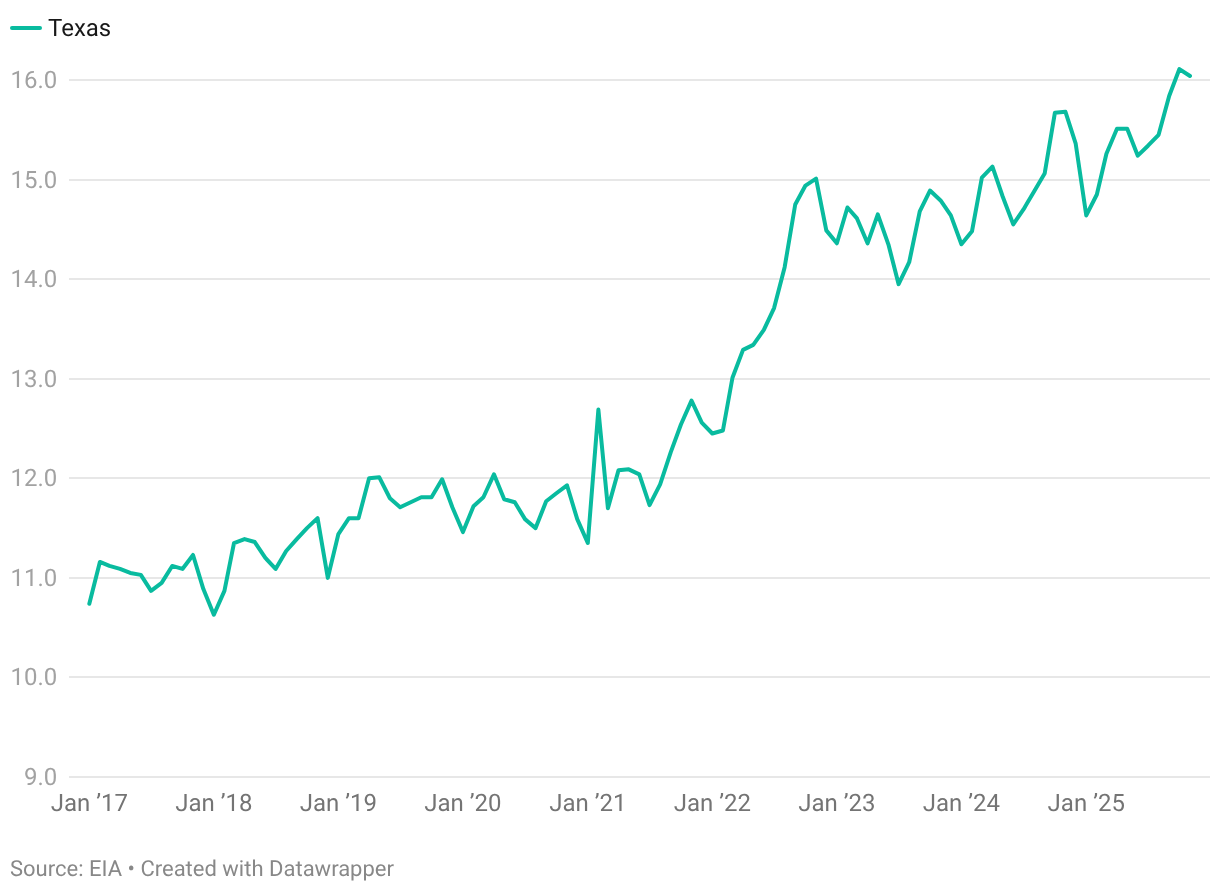
Power Move: Switch before the heat hits. Rates rise when A/Cs kick on statewide.
Common Mistakes Texans Make When Choosing Plans
- Ignoring their real kWh usage
- Comparing only the "average rate"
- Missing deposit waiver eligibility
- Falling for "free nights" gimmicks
- Forgetting to renew on time
How Gatby Autopilot Makes Energy Effortless
Gatby Autopilot continuously monitors market pricing, your usage, and plan expiration dates. When a cheaper or better-fitting plan appears, Gatby automatically handles the switch.
How it Works:
- You sign up once.
- Gatby tracks ERCOT, EIA, and REP offers daily.
- When savings opportunities appear, Gatby executes the switch.
- You keep uninterrupted power—and always stay on your best deal.

Power Move: Never overpay again. Gatby Autopilot fights the system—so you don't have to.
Glossary: Plan Terms Texans Should Know
| Term | Description |
|---|---|
| Average Price: | Rate displayed at 500/1,000/2,000 kWh tiers. |
| Base Charge: | Fixed monthly fee on all plans. |
| Contract Term: | Duration of agreement (months). |
| Deposit: | Refundable payment for credit-risk customers. |
| EFL: | Electricity Facts Label, required by PUC §25.475. |
| Fixed Rate Plan: | Price per kWh stays constant through term. |
| Green Plan: | Uses Renewable Energy Credits (RECs) under §25.476. |
| ID Verification: | Required to enroll and prevent fraud. |
| PUCT: | Public Utility Commission of Texas, regulator. |
| Renewable Content: | Portion of plan powered by renewables. |
| TDSP: | Utility delivering electricity to your home. |
| Variable Rate Plan: | Changes monthly with market prices. |
Find Your Best Energy Plan
Compare rates from the top 25+ electricity providers
Free to use. No credit card. No commitment.