What Is a Kilowatt-Hour on Your Texas Electric Bill?
Learn what a kilowatt-hour means for Texas electric bills, how Oncor and CenterPoint meter usage, and how Gatby helps match plans to household needs.

Written by Hash Manesia
Published on Oct 4, 2026
|
7 min read
Reviewed by Kyle Aubuchon
:quality(80))
What Is a Kilowatt-Hour on Your Texas Electric Bill?
What Does Kilowatt-Hour Mean in Simple Terms?
A kilowatt-hour is a unit of energy consumption, not a unit of power. It represents the amount of energy used over a period of time, rather than the rate at which energy flows at any given instant. Think of it as a measure of total work done, similar to how a mile measures distance traveled regardless of how fast a car was moving.
A kilowatt, by contrast, is a unit of power that describes how quickly energy is being used or produced at a given moment. The distinction matters because your electric bill charges you for the energy you consume over time, expressed in kilowatt-hours, not simply the power level of your devices. Understanding this difference is the first step toward making sense of any Texas electric bill.
How Is Your Energy Usage Measured in Texas?
In Texas, the utility that delivers electricity to your home is separate from the retail provider that sells you your energy plan. Utilities such as Oncor Electric Delivery, CenterPoint Energy Houston Electric, AEP Texas, and Texas-New Mexico Power Company own and maintain the poles, wires, and meters that carry electricity to homes and businesses across their respective service areas.
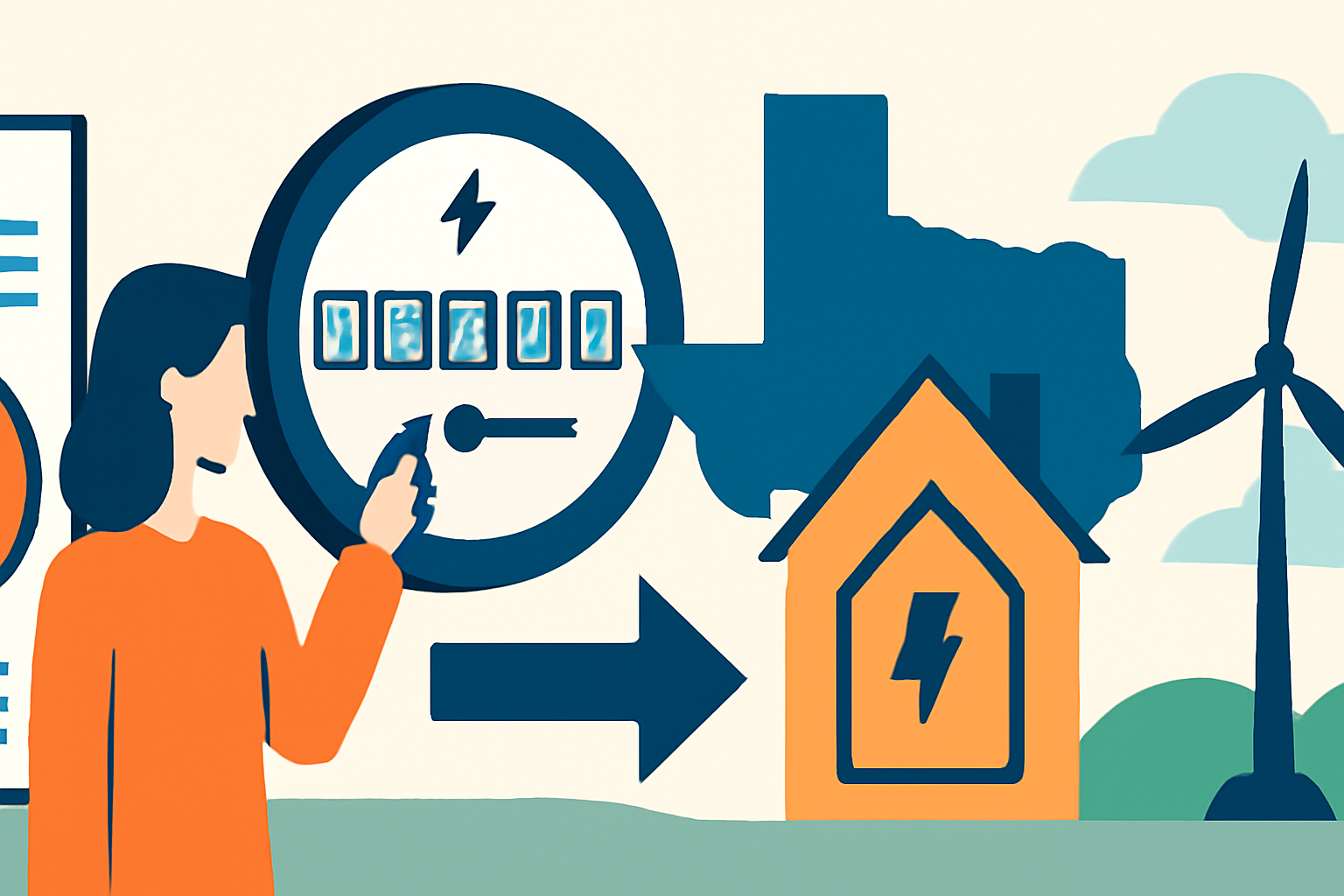
These utilities install and read meters that track how much energy passes through your connection, recording usage in kilowatt-hours over each billing cycle. That usage data is then shared with your retail electricity provider, which uses it to calculate your bill according to your chosen plan's rate structure. This division of responsibility means the utility handles delivery and metering, while your provider handles pricing and billing.
Why Understanding Kilowatt-Hours Matters for Your Bill
Your monthly electric bill is essentially the product of two factors: how many kilowatt-hours you used and the rate structure attached to your plan. Even identical usage patterns can result in different total charges depending on how a plan is structured, since some plans apply a flat rate to every kilowatt-hour while others include tiered pricing, time-of-use elements, or other structural features.
Because kilowatt-hours are the common currency across all plan types, understanding your own usage patterns helps you interpret why your bill looks the way it does from month to month. Seasonal changes, appliance use, and daily routines all show up as shifts in kilowatt-hour consumption, which in turn drive changes in your total charge.
How Many Kilowatt-Hours Do Common Appliances Use?
Different household appliances draw vastly different amounts of energy depending on their size, purpose, and how long they run. Large appliances that generate heat or cold, such as air conditioning systems, water heaters, and clothes dryers, tend to consume more energy over time than smaller electronics like phone chargers, routers, or lamps.
- Heating and cooling equipment typically uses more energy than lighting or small electronics because of the continuous work involved in changing air temperature.
- Appliances with motors or heating elements, like refrigerators, dryers, and water heaters, often run for extended periods and contribute meaningfully to overall usage.
- Electronics left in standby mode draw smaller amounts of energy individually, but their combined effect can add up across a household.
- Efficiency ratings matter because two appliances performing the same task can use noticeably different amounts of energy depending on their design and age.
Paying attention to which appliances tend to run longest or most frequently in your home can help you understand where your kilowatt-hour usage is coming from, even without focusing on exact figures.
What Role Does the PUCT Play in Electricity Measurement?
The Public Utility Commission of Texas (PUCT) oversees the standards that govern how electricity usage is metered and reported across the state. This includes setting requirements for meter accuracy, ensuring utilities maintain reliable measurement equipment, and establishing rules for how usage data is communicated to both retail providers and customers.
The PUCT also plays a consumer protection role, working to ensure that Texans have access to clear, accurate usage information so they can understand and verify what appears on their bills. This oversight helps maintain trust in the metering process, regardless of which utility delivers electricity to a given service area or which retail provider a customer chooses.
How Can Understanding Kilowatt-Hours Help You Choose a Plan?
Once you have a sense of your typical kilowatt-hour usage, comparing electricity plans becomes far more meaningful. Rather than looking at a headline rate in isolation, you can consider how a plan's rate structure interacts with your actual consumption patterns, including whether your usage tends to be steady throughout the day or concentrated during certain hours.
Gatby helps Texans navigate this process by connecting customers with plans that align with their household's consumption patterns and preferences. Rather than sorting through plan details alone, customers can work with Gatby to identify options suited to how they actually use energy, and to manage their plan selection as their needs change over time.
Simple Habits to Track and Reduce Kilowatt-Hour Usage
Building awareness of kilowatt-hour usage does not require complicated tools. Small, consistent habits can help households understand and manage their consumption over time.
- Check usage data provided by your utility or retail provider regularly to notice patterns and shifts from month to month.
- Adjust thermostat settings gradually rather than making large swings, since heating and cooling equipment tends to be a major contributor to household usage.
- Run large appliances like dishwashers and clothes dryers with full loads to make each cycle count toward less overall usage.
- Unplug or power down electronics and chargers that are not in active use to reduce standby energy draw.
- Consider upgrading aging appliances to more efficient models when replacement becomes necessary, since efficiency ratings can meaningfully affect long-term usage.
- Use natural light and ventilation when practical to reduce reliance on lighting and cooling equipment.
Over time, these habits build a clearer picture of where and how energy is used in a home, making it easier to interpret bills and make informed decisions about future plan choices.
Frequently Asked Questions
Is a kilowatt-hour the same as a kilowatt?
No. A kilowatt is a unit of power that describes the rate at which energy is used at a given moment, while a kilowatt-hour is a unit of energy consumption that measures how much energy is used over a period of time. Electric bills are based on kilowatt-hours because they reflect total consumption, not instantaneous power draw.
Which utility delivers my electricity in Texas?
Depending on where you live, your electricity may be delivered by Oncor Electric Delivery, CenterPoint Energy Houston Electric, AEP Texas, or Texas-New Mexico Power Company. These utilities maintain the physical infrastructure and meters, while a separate retail provider sells you the energy plan itself.
How do utilities measure my kilowatt-hour usage?
Utilities install meters at your home or business that track how much energy passes through your connection over each billing cycle. This usage data, recorded in kilowatt-hours, is then shared with your retail provider, which applies your plan's rate structure to calculate your bill.
What does the PUCT do regarding electricity measurement?
The Public Utility Commission of Texas oversees metering standards to help ensure accuracy and reliability across the state. It also supports consumer protections related to how usage data is reported, helping Texans trust and understand the information that appears on their bills.
Why do appliances use different amounts of energy?
Appliances vary in energy use based on their size, purpose, and how long they operate. Equipment that heats or cools, like air conditioners and water heaters, typically draws more energy over time than smaller electronics, and efficiency ratings can further affect how much energy a given appliance uses to perform the same task.
How can understanding kilowatt-hours help when comparing electricity plans?
Knowing your typical kilowatt-hour usage allows you to evaluate how a plan's rate structure would apply to your actual consumption, rather than focusing on a rate in isolation. Gatby helps Texans connect with plans suited to their usage patterns and can help manage plan choices as household needs change.
Related reading
Browse 150+ plans from top providers and others
Table of Contents
Table of Contents
You may also like